


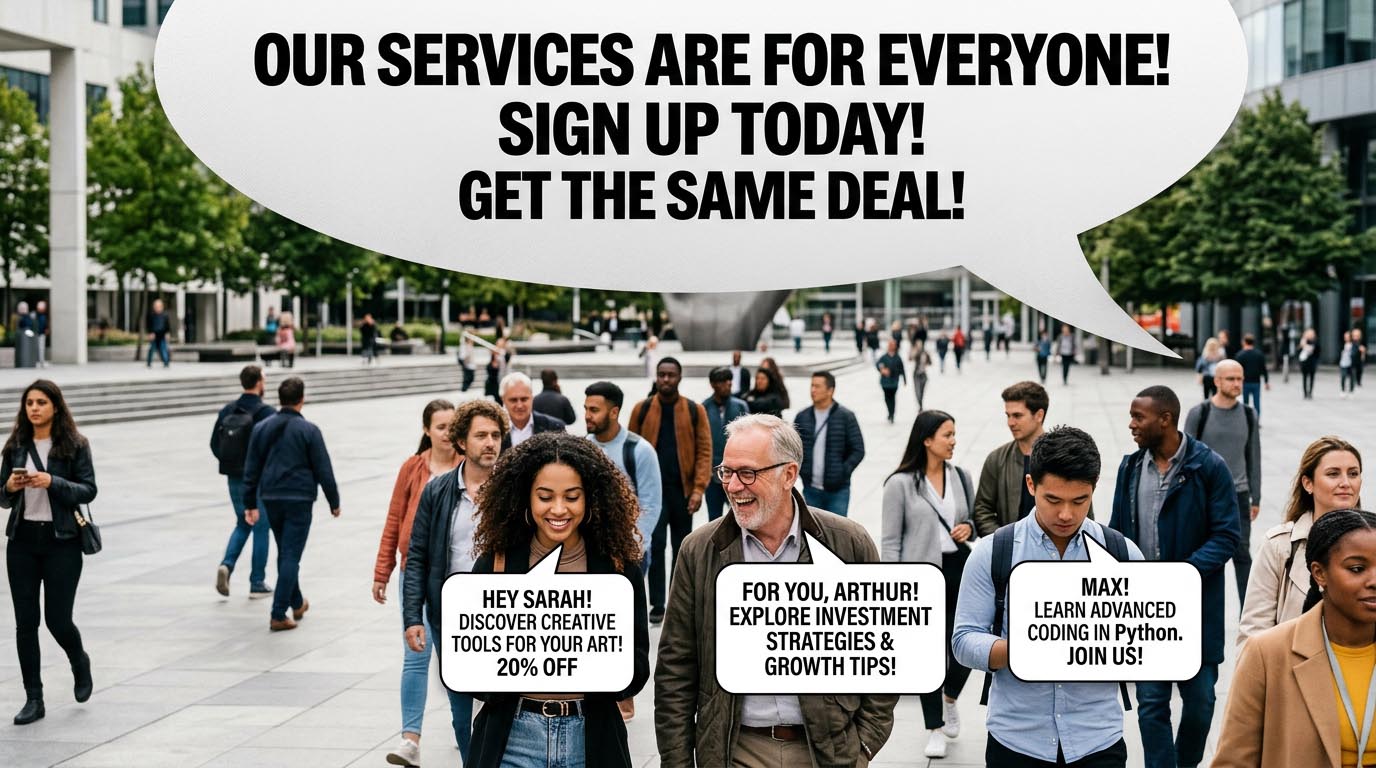
A few weeks ago, a marketer who spent years inside a pro sports team told us something that changed how we think about email.
Their events had six-figure crowds and a mailing list to match. But the emails that actually got opened weren't the ones sent to everyone.
They were the ones built for one kind of fan.
A parent bringing a toddler to their first game doesn't want "game day is here." They want to know where to park the stroller, what's on the kids' menu, and when the fireworks go off — so nobody melts down at kickoff.
Same event. One email for 50,000 people—a different one for the 1000 who actually needed it.
That conversation stuck with us, because it named something we'd been circling for a while: the era of the mass email is over, and most teams haven't noticed yet.
Why "Bigger" Stopped Working
For years, email strategy has been a numbers game. Grow the list. Increase send frequency. Optimize the subject line for open rate. It worked, for a while, because inboxes weren't as crowded and audiences weren't as fragmented.
That playbook is running out of steam. Inboxes are more competitive than ever, attention spans are shorter, and audiences can smell a mass blast, even a well-designed one.
The subject line might get the open. The content is what gets the click, the read, the memory.
And the content remembered is rarely written for "everyone." It's written for someone.
What Specific Looks Like
We've watched the same principle play out in our work for clients: one product line, three different buyers, three completely different emails.
Same product. Different headline. Different hero image. Different feature, front and center.
A gamer opens an email with "refresh rate" and "input lag" in the subject line. A parent opens one led with a single hub for the whole family's shows. A design-conscious buyer opens an email showing a screen that disappears into the room. None of them see the other's email. Each one sees the one thing that matters to them first.
This isn't a redesign. It's a re-segmentation. The product doesn't change. The offer doesn't change. What changes is which truth about that product gets told first, and to whom.
Here's the pattern we keep seeing across sports, consumer electronics, and nearly every client we've segmented email for: the list isn't too small. The message is too big.
A single email trying to speak to a parent, a gamer, and a design buyer at once ends up speaking to none of them. It hedges. It generalizes. It gets skimmed, if it gets opened at all.
Break that same list into three, five, or even ten smaller groups, each one built around a real difference in what people need or care about, and the message gets sharper by necessity. You can't write a vague headline for "parents of toddlers going to their first game." You have to be specific, or the email falls flat.
That constraint is the whole point. Specificity isn't a nice-to-have layered on top of good email marketing. It's what good email marketing has become.
How to Do This
The good news: most teams don't need new data to start. They need a different way of using the data they already have.
Start with what you already track. Purchase history, browsing behavior, signup source, and past engagement. Most of this is already sitting in your CRM or ESP, unused for segmentation.
Cut the list into a handful of real segments. Not thirty micro-groups, not one giant list, somewhere between three and ten groups, each built around a genuine difference in need, context, or intent.
Write to a person, not a database. For each segment, change the headline, the hero image, and the one feature or detail that matters most to them. Everything else about the email can stay the same.
It's a small operational shift with an outsized effect, because it targets the actual reason emails get ignored: they don't feel like they were written for the person reading them.
The Takeaway
The most successful campaigns are the ones willing to deliberately make their audiences smaller so the message can get sharper.
We build segmented email systems for brands done shouting into the void: specific content for smaller audiences that actually gets read.
If that's where your email program needs to go, book a discovery call and let's talk about what it would look like for your list.