


There are plenty of ways to measure a successful website.
Traffic. Engagement. Conversions. Search visibility. And, occasionally, a room full of people applauding your work.
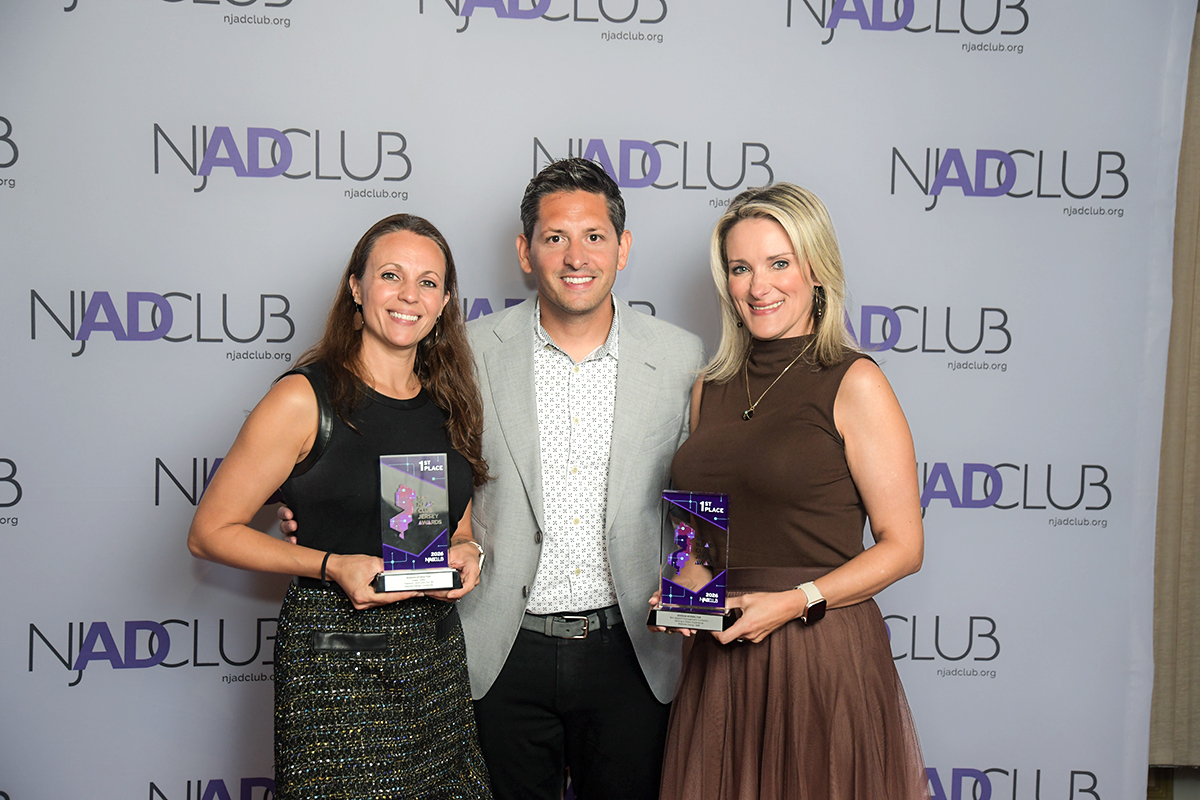
A few days ago, our team had one of those nights.
At the 58th NJ Ad Club Jersey Awards, eDesign Interactive won five awards, including the prestigious Best of Website Design honor. The winning work spanned three very different brands and three very different digital challenges: Green Valley, Bon Appétit Management Company, and Existence.
What connects them isn't a particular visual style or technology.
It's something simpler: each project started with a question about the audience and used design to turn the answer into an experience.
Green Valley: When the Design Tells the Story
For many shoppers, “lactose-free” can sound synonymous with “dairy-free.” That creates an immediate challenge for Green Valley, a brand built around real milk, real dairy, and lactose-free products.
The website needed to close that gap quickly.
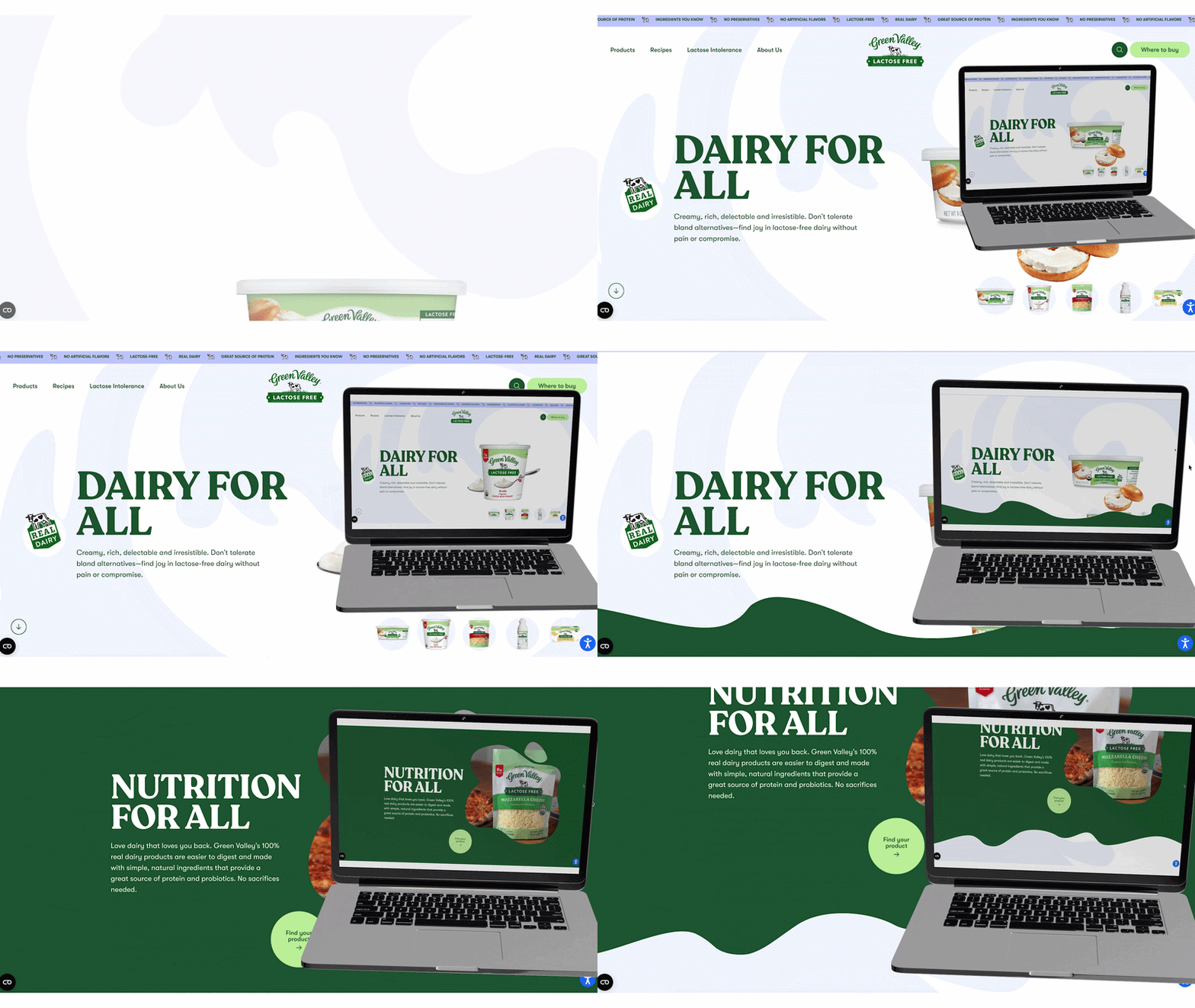
Our solution was to let the design do some of the explaining.
Creamy whites, flowing shapes inspired by milk, soft color accents, and playful details immediately establish a connection to dairy before visitors have read a single sentence. A small cow mascot adds a little personality and reinforces the brand's connection to its source.
It's a simple principle, but an important one: The best digital experiences don't always explain more. Sometimes, they communicate better.
The site also had to do plenty of practical work. Product pages make ingredients, certifications, and nutritional information easy to find. Recipes give visitors a reason to explore. Search and store-locator tools help turn curiosity into action.
And behind the scenes, the project had its own constraint: a defined budget and a tight timeline. Rather than rebuilding everything, we modernized much of the existing CMS and focused investment where visitors would notice it: on design, animation, and front-end interaction.
The result is a useful reminder that constraints don't have to make a digital experience less ambitious. They can simply force better decisions.
Green Valley received 1st Place in Website Design: Consumer.
Bon Appétit: Modernizing a Brand Without Losing its Soul
If Green Valley's challenge was about perception, Bon Appétit's was about evolution.
The company's previous website had served the organization for nearly two decades. During that time, Bon Appétit grew into an industry leader with more than 1,000 cafés across 33 states, while developing a strong philosophy around sustainability, culinary integrity, local partnerships, and scratch cooking.
The challenge wasn't simply to make the website look newer. It was to make the digital experience feel like Bon Appétit today.
That meant respecting what was already valuable while creating room for something new.
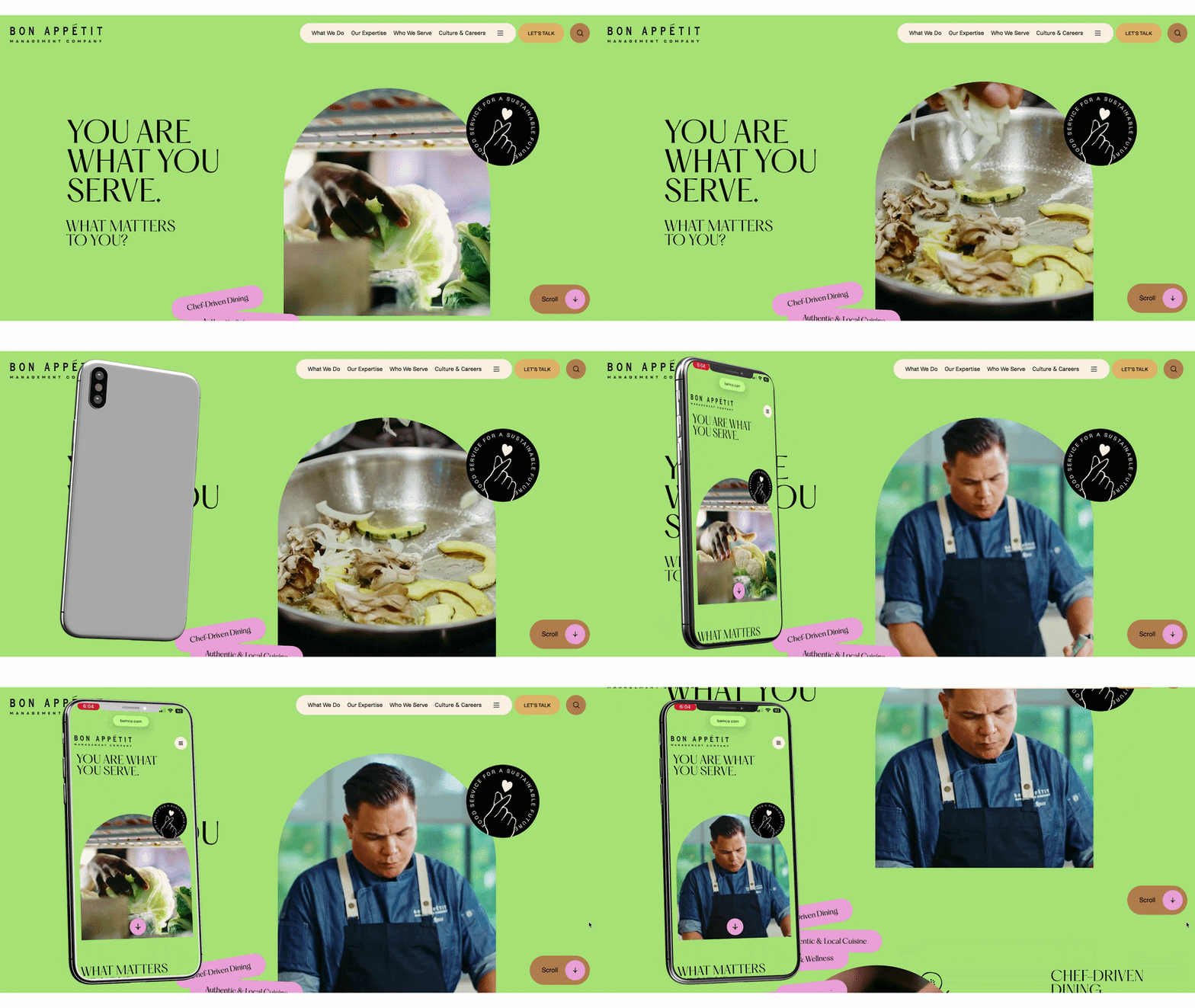
The iconic logo remained, with subtle refinements. Typography became cleaner. The visual language became brighter and more expressive. Layered compositions and editorial-style layouts replaced the safer, more corporate aesthetic common in the food-service industry.
The lesson? Modernization doesn't always mean reinvention. Sometimes it means knowing what not to change.
The same thinking shaped the site's photography.
We created a dedicated photo and video production in Philadelphia, capturing real kitchens, chefs, students, guests, and everyday moments. Bon Appétit's extensive image archive added another layer of authentic content from across the country.
That authenticity makes a difference.
Seeing a real chef in a real kitchen is far more convincing than seeing a perfectly composed stock photo of someone who has never heard of the company.
For a brand built around people, food, and community, the real thing was always more powerful.
The new site also introduced clearer pathways for different audiences, including corporate clients, higher education partners, and prospective employees, and built accessibility into the development process to meet WCAG 2.2 Level A standards.
The result is a digital experience that feels bold without abandoning the brand equity that came before it.
Bon Appétit received 1st Place in Website Design: B2B, and the prestigious Best of Website Design.
Existence: Designing an Interface for a Philosophy
Then there's Existence.
This project began with a very different kind of challenge.
Existence, founded by entrepreneur Rob Dyrdek, is a Time Intelligence platform built around a provocative idea: the way we create our time shapes who we become.
The platform turns lived time into data, helping people see the difference between the person they intend to become and the person their actual time is creating.
It's an intriguing philosophy.
It's also not the easiest thing to explain with a conventional landing page.
So instead of treating the website as a product brochure, we approached it as an introduction to a new way of thinking.
The experience had to make something abstract feel tangible.
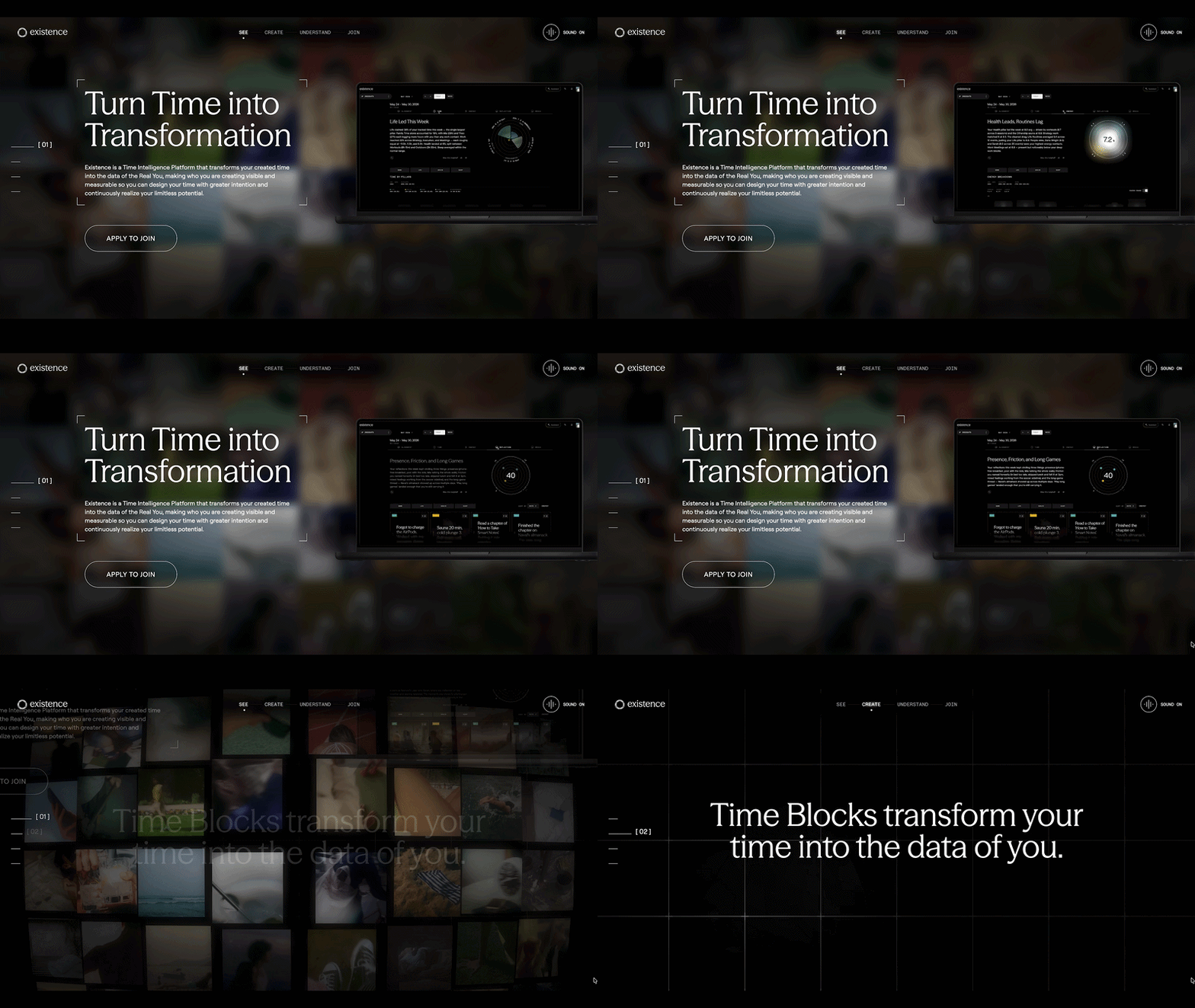
Our team led the UX strategy, interface design, and front-end development, focusing on clarity, fast onboarding, and making complex ideas understandable at a glance. The experience introduces the platform's core framework and its concept of the Time Creation Cycle—Design, Account, and Optimize.
At the center is the Existence Grid, an interactive visualization that lets users explore time across days, weeks, months, and years.
Here, interaction isn't decoration.
It is part of the explanation.
That's an important distinction in digital design.
Animation, motion, and interactivity are easy to add. The harder and more valuable question is whether they help someone understand an idea.
With Existence, the experience itself became a way of understanding the product.
Existence received 1st Place in Digital Media: Landing Page and 1st Place in Creative Excellence: Innovation & Emerging Platforms.
Different Brands. Different Challenges. One Approach.
A lactose-free dairy company. A food-service industry leader. A platform designed to change the way people think about time.
On the surface, these three projects don't seem connected. But look a little closer, and a pattern emerges.
Green Valley needed to overcome a misconception, so we used visual storytelling to communicate before the copy had a chance to.
Bon Appétit needed to evolve, so we balanced brand heritage with a more expressive, contemporary experience.
Existence needed to explain something abstract, so we made interaction part of the story.
In each case, design followed the idea. And that's perhaps the biggest lesson we took away from the 2026 Jersey Awards.
Great digital design isn't about making a website look impressive. It's about making the right thing impossible to miss.
Sometimes that's a product's difference. Sometimes it's a brand's personality. Sometimes it's an entirely new way of thinking.
The technology, typography, photography, animation, and interface all have a role to play, but they're most effective when they serve a clear idea.
We're incredibly proud of the recognition from the 58th NJ Ad Club Jersey Awards. But we're even prouder of the work that earned it.
Because behind every award is a team of designers, strategists, developers, writers, technologists, and clients making hundreds of decisions to turn an idea into something people can experience.
Five awards give us a moment to celebrate.
The projects give us a reason to keep asking better questions.
What should people understand? What should they feel? What will they remember?
And, perhaps most importantly: What could this experience become if we stopped designing for the expected?
That's the question we'll keep bringing to the next project.
Whether you're launching something new, rethinking an established brand, or simply wondering what's possible when strategy, design, technology, and a little creative risk come together, let's start a conversation.