



You send a design for review. Three pages of analysis and recommendations come back. It all sounds professional, but after a careful read, one question remains: what exactly should we improve, and why?
We encounter this kind of feedback more and more often. Generic advice repeated in different ways. Suggestions that contradict one another. Confident assessments that overlook the project's goals and decisions already made.
AI can produce that text in seconds. Making sense of it still takes real time for the team.
At eDesign, we value feedback because our clients know their businesses best. They know what buyers ask, what concerns them, and which advantages actually help make a sale. Our job is to advise them on turning that knowledge into a clear, compelling digital presence that works.
That is why your perspective matters so much.
“Our customers often assume we only work with large companies, and this page reinforces that impression” can change how an entire service is presented. It gives the team a specific problem and business context. “Optimize the user experience and strengthen the messaging” leaves all the important details unresolved.
We don't expect you to speak like designers or arrive with ready-made solutions. Even “This doesn't feel like us, but I can't explain why yet” is a useful starting point. We can ask questions and work through the reasons together.
The difficulty begins when polished writing masks the absence of a clear point of view. Researchers at BetterUp Labs and the Stanford Social Media Lab call this kind of content workslop: AI-generated work that looks complete but leaves the real thinking to the recipient.
On a web project, that means more meetings, clarification, and revisions. The designer tries to interpret the intent. The project manager reconciles conflicting comments. Development waits for a decision. Minutes saved in writing can become hours of work for several people, using up budget intended for improvements to the website.
Of course, detailed feedback can be very useful. So can criticism. We want to know when we have missed something important. What matters is whether a comment helps us make a better decision, regardless of the tool used to write it.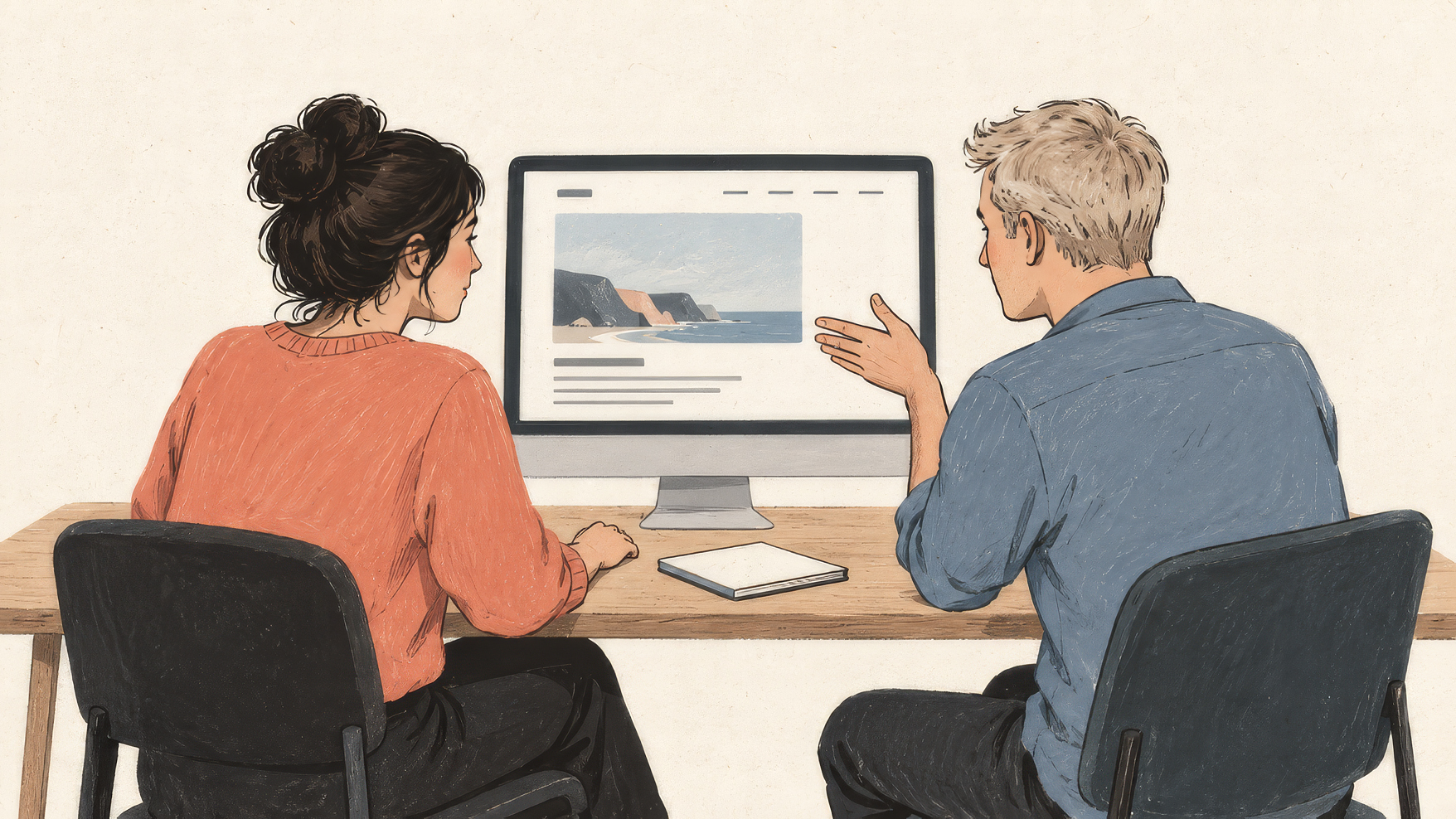
AI has a place in this process. It can help clarify your thinking, organize your notes, and flag contradictions. A few simple habits make it much more useful:
1. Write down your own thoughts first. Review the proposal and the team's explanation. Note what works, what concerns you, and why. Then use AI to put those observations into words. Give it the project's goal, audience, and current stage.
2. Point to the specific place and explain why it matters. For example: “On the mobile product page, I can't find compatibility information before the purchase button. Our sales team gets this question frequently.” A screenshot with the relevant element marked often helps more than a lengthy explanation.
3. Use AI to organize your team's comments. Ask it to remove repetition and flag disagreements without erasing different opinions. You should confirm which points are required changes, which are questions, and which are ideas for discussion. An AI assumption that “users will be confused” still needs to be checked.
4. Read everything before sending it. Keep the comments you understand and stand behind. Check whether AI has added new requirements or unsupported conclusions. If all it can see is an image, it cannot establish how the forms, navigation, or site loading actually work.
You can start with this prompt:
Organize my notes into concise feedback for the web team. Preserve the meaning and examples, and remove repetition. Separate questions from confirmed requirements. Flag contradictions and ask me for any missing context. Do not add new criticisms, facts, or priorities.
The responsibility is shared. We need to explain our decisions, ask the right questions, and show how your feedback has shaped the work. When we recommend a different approach, we owe you a clear explanation of the benefits and the implications for time and budget.
At eDesign, we believe in this collaboration. Technology can help the conversation. Business knowledge, human judgment, and mutual trust give it direction.
Have an idea for a new website, a digital product, or a better way to present your business online? We'd love to hear what you want to achieve and discuss how we can make it happen together.