


Yesterday, our agency opened its doors in a slightly different way.
Instead of clients, strategy decks, and UI prototypes, we welcomed something far more unpredictable: our children!
It was our “Take Your Child to Work Day.”
In hindsight, it wasn’t a break from our work at all; it was a reminder of why the work exists in the first place.
As an award-winning design agency, we discuss user journeys, conversion rates, accessibility, design systems, and emerging AI workflows daily. But yesterday, all of this was stripped down to its most essential form:
Curiosity. Imagination. And the courage to say, “What if?”
Wimpy Kid, Coloring Pages, and Creative Chaos
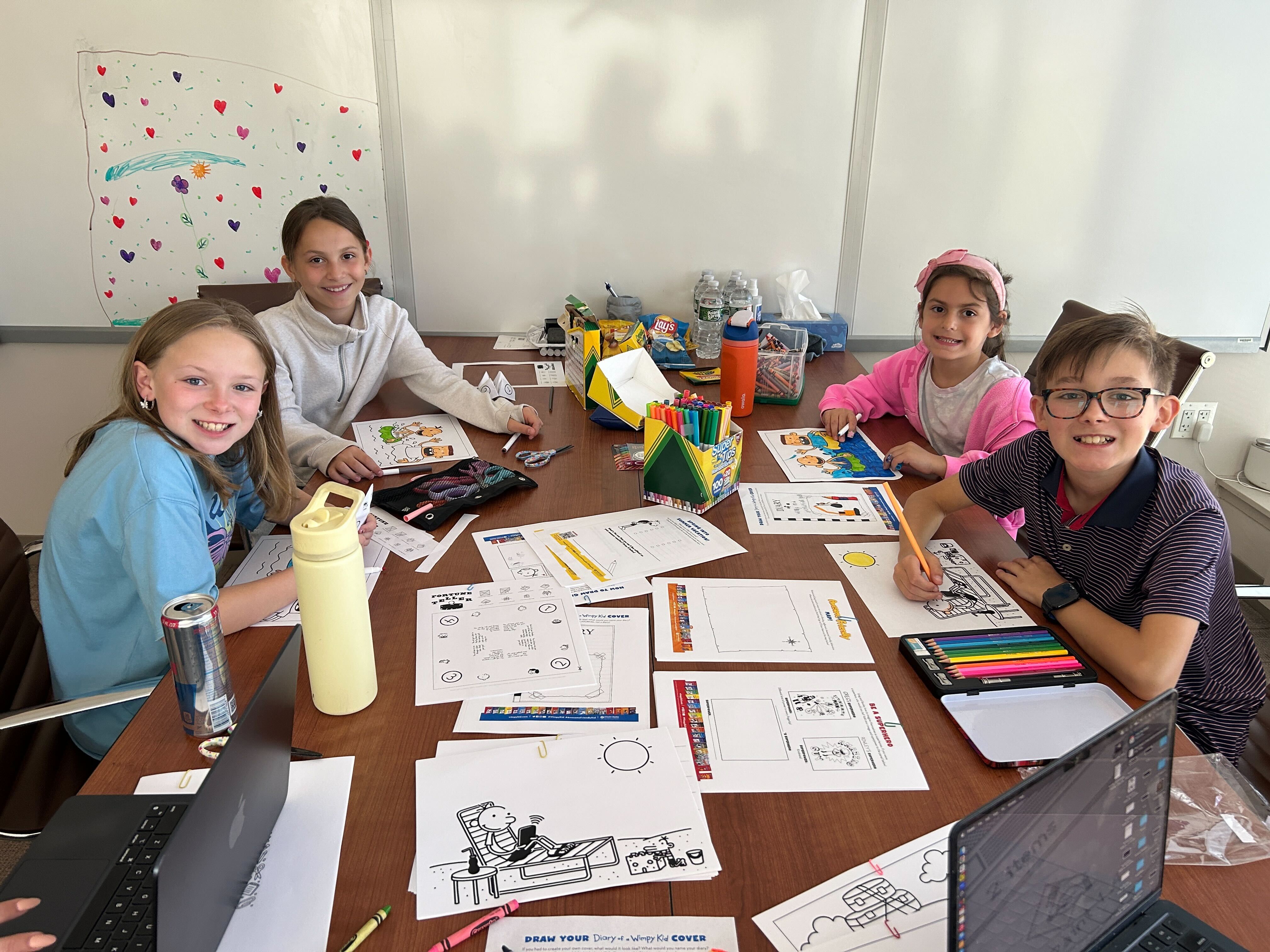
The day began with laughter, markers, and a table full of coloring pages and activities inspired by Diary of a Wimpy Kid, one of our beloved long-standing clients. For several years, our team has been building the interactive digital world that surrounds Jeff Kinney's iconic book series and its Disney films, a creative partnership we are enormously proud of.
Watching the kids light up at the characters they know from their bookshelves, now part of the digital work their parents make, was a fun experience.
Next, we gave the kids a simple sales challenge: pitch random objects to the team. What followed wasn’t selling—it was pure storytelling and emotional design, stripped of any jargon or hesitation. They didn’t focus on features, but on how something could make someone feel better. There was only conviction. And conviction is the strongest form of persuasion.
Without realizing it, they were already doing what many digital products struggle with: translating function into meaning.
But then came the moment none of us were quite prepared for.
When Children Become Product Designers
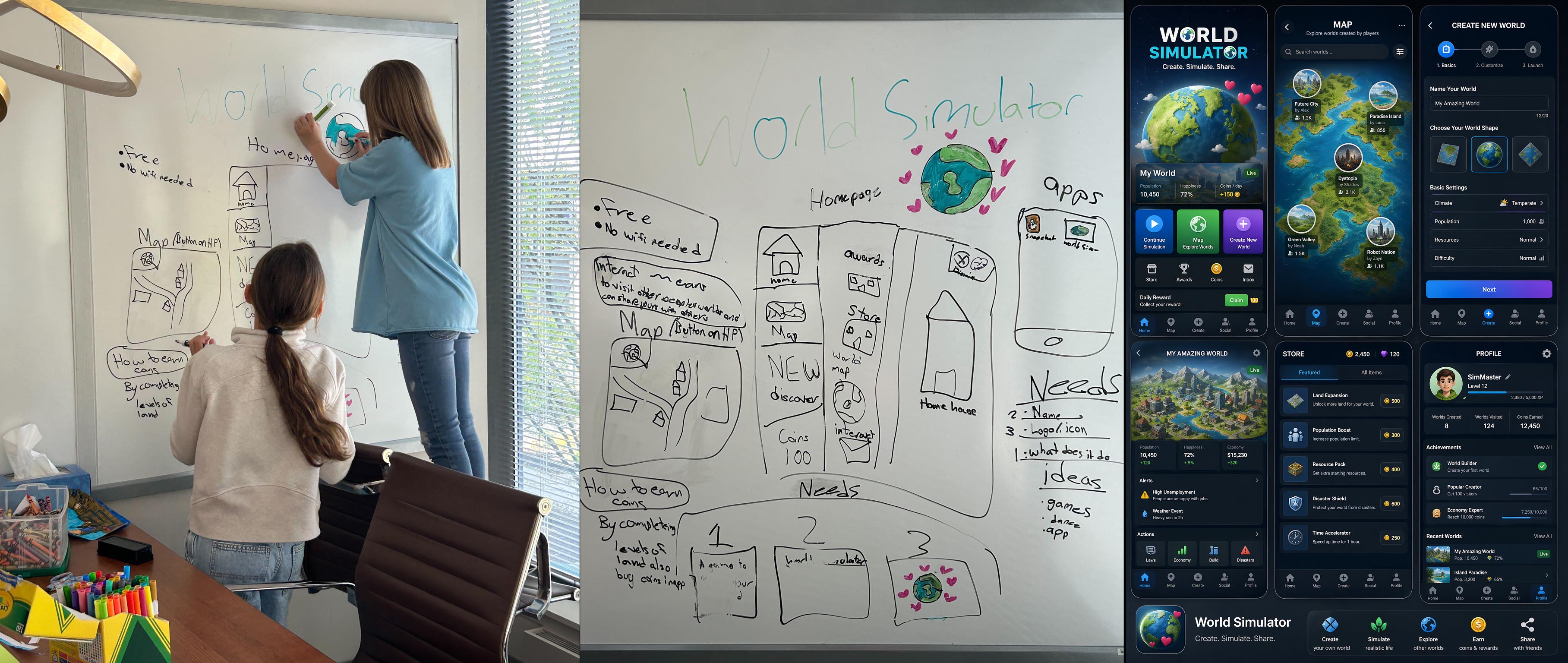
We sat the kids down and said: design an app, design a website, solve a problem that matters to you.
They could draw screens, write words, sketch flows, whatever felt natural. No templates. No constraints. Just ideas. We told them there were no wrong answers.
Our kids designed, drew navigation menus, and wrote copy. They described user journeys with remarkable specificity. They argued, with genuine passion, about what their users would need.
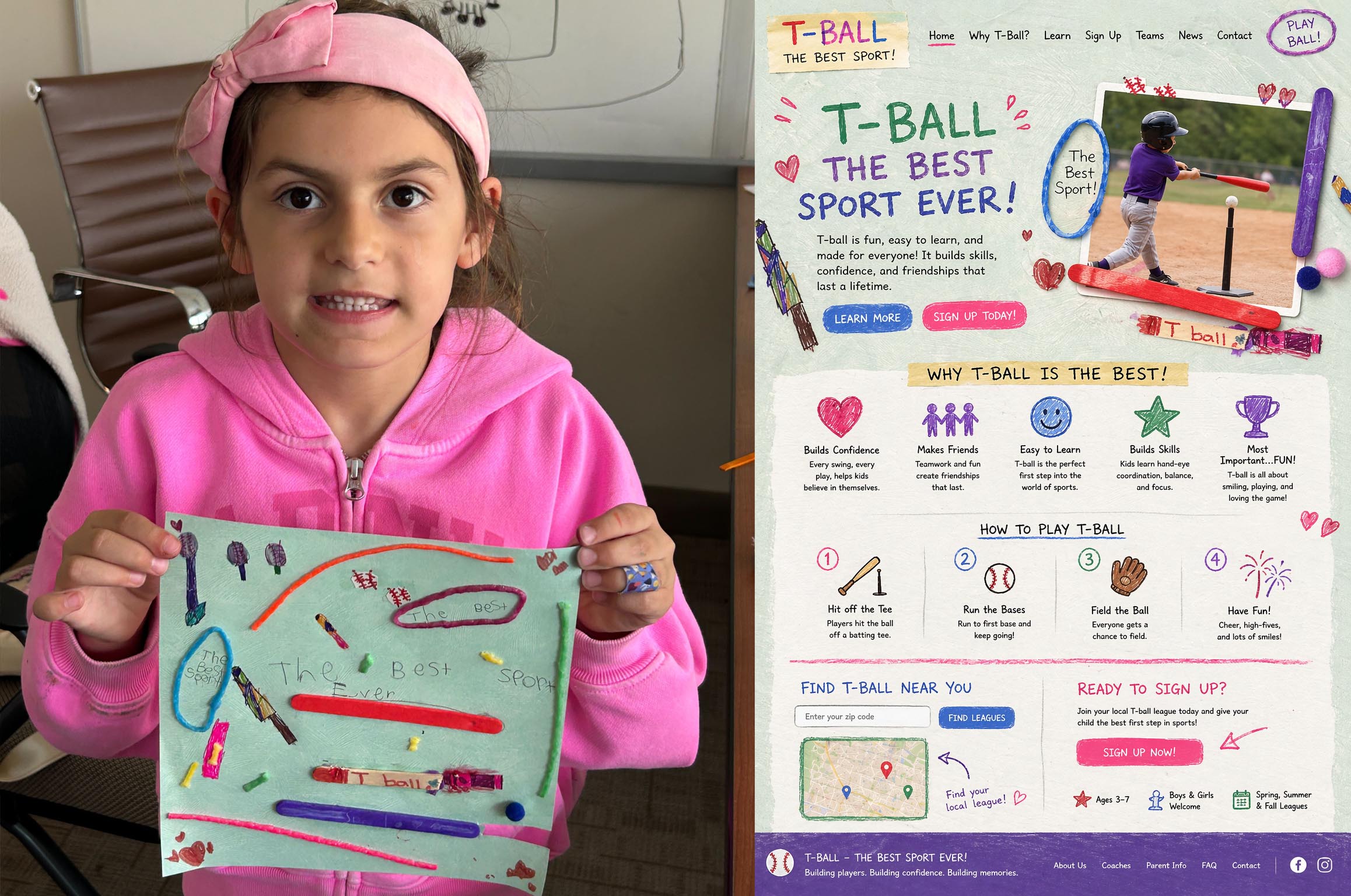
We used AI to visualize their concepts into real, tangible prototypes. Suddenly, their drawings and explanations became interfaces, screens, and product journeys.
What emerged was surprisingly coherent. And more importantly, it was deeply human.
Here is what they built.
Apps That Came From Real Concerns
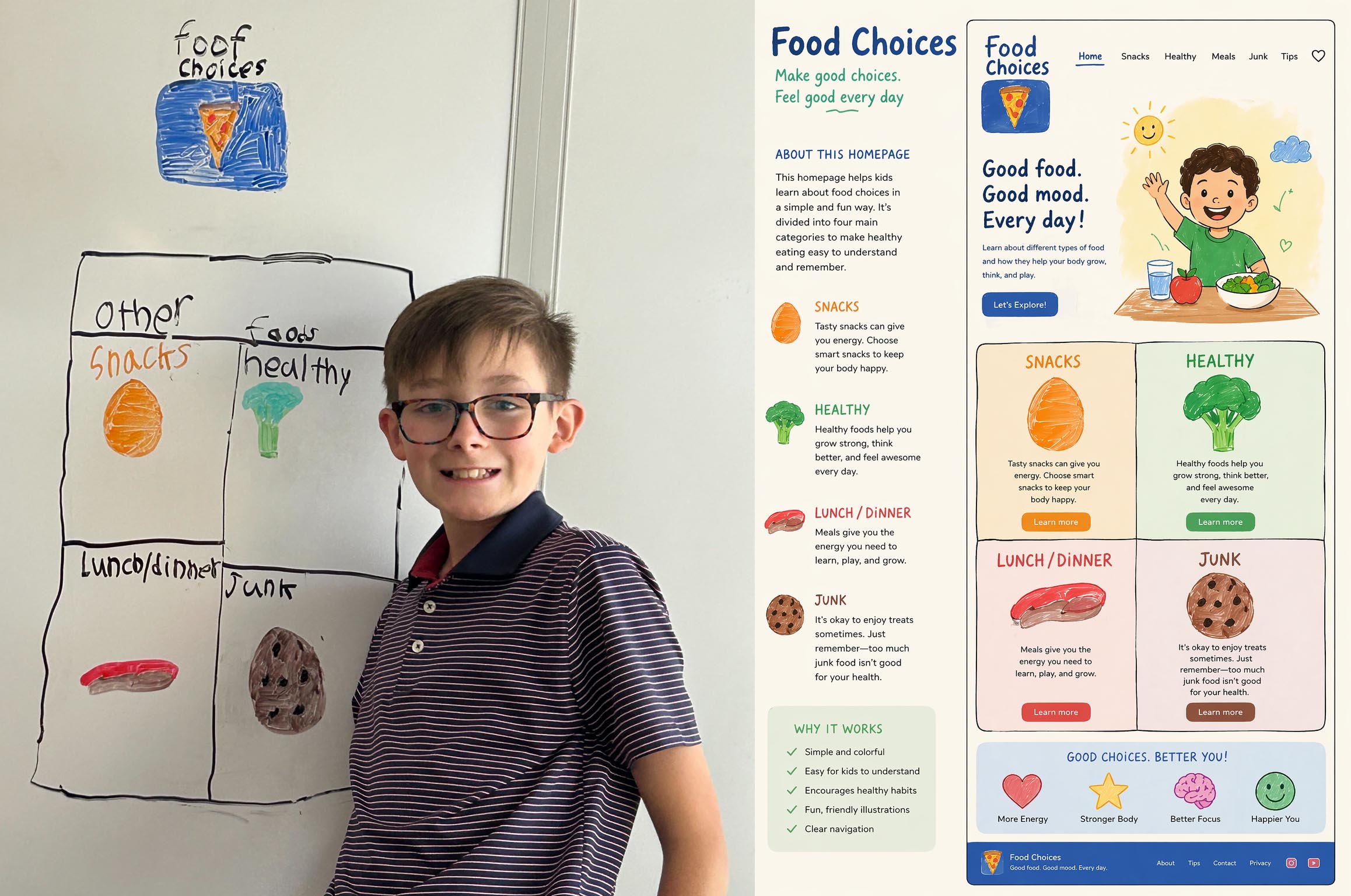
One child designed a healthy-eating app—not as a diet tracker, but as a gentle guide helping kids make better food choices without shame or pressure. A guide to help young people understand what they eat and why it matters. The goal wasn’t control; it was awareness. The designer understood instinctively that his audience was his peers, and he built empathy directly into his app.
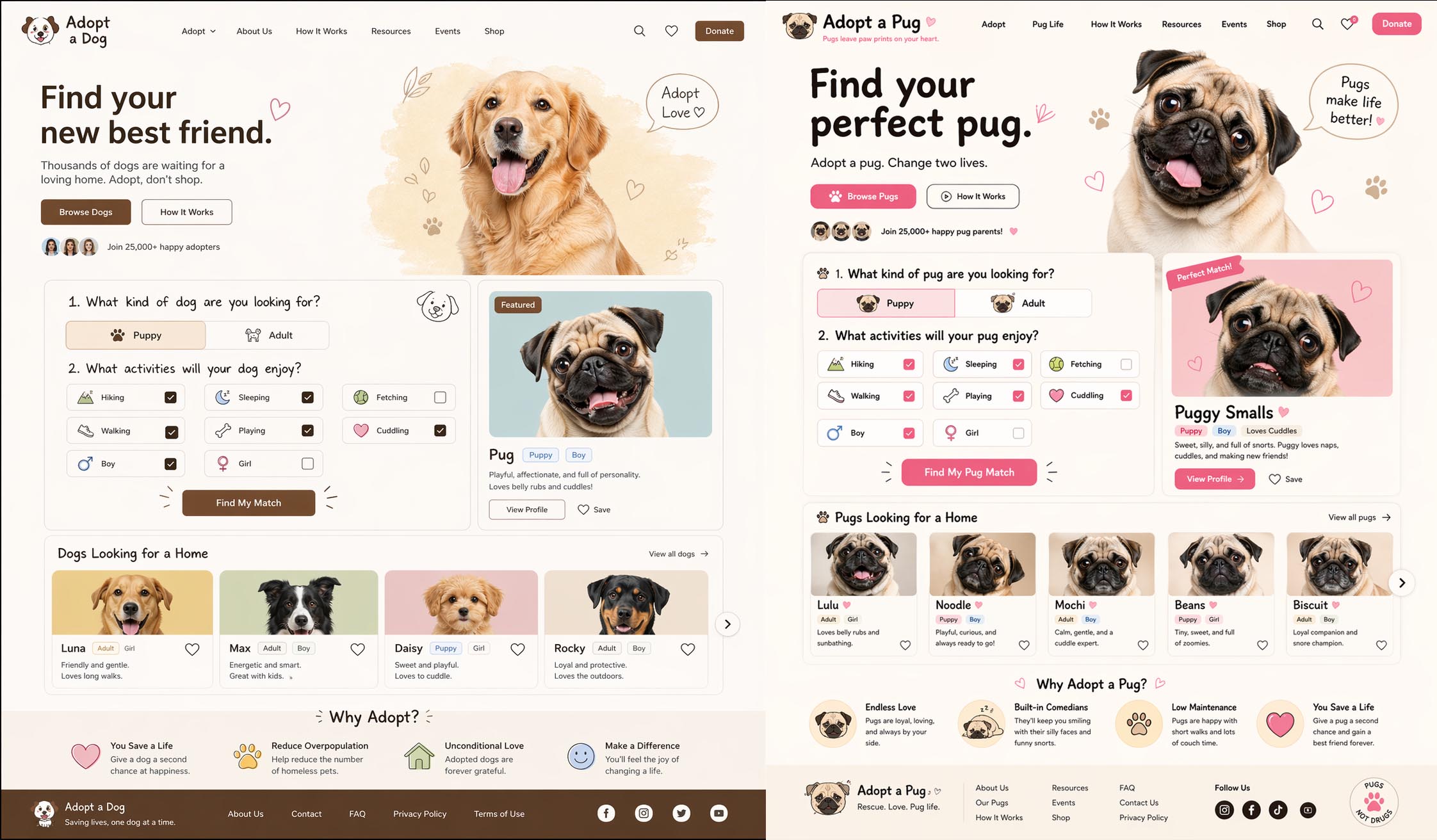
Another created a platform for dog adoption. Not just listings, but a matching system that pairs people with dogs based on lifestyle, activity level, and emotional compatibility. The idea was simple but profound: don’t choose a pet because it’s cute—choose one you can truly care for.
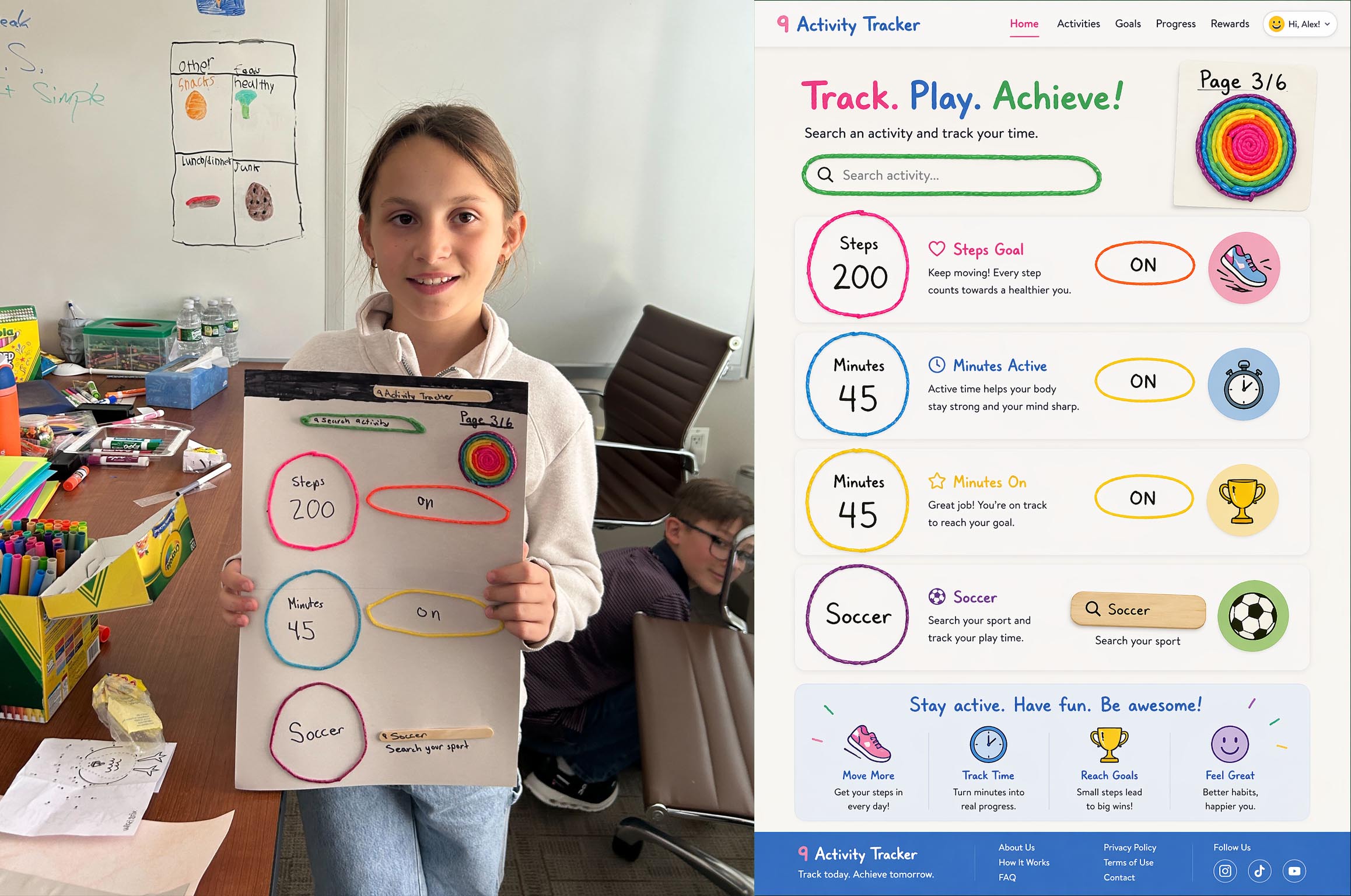
Another built an activity tracker focused not on performance, but on happiness. The metrics weren’t just steps or scores, but “feeling good,” “learning something new,” and “building better habits.” The brief this child wrote for their own app could be submitted to any product meeting in the world: build better habits, feel great, be happy. Simple, human, and true.
There was also a T-ball community website: part educational hub, part social connector, part sign-up platform, designed to help kids find teams, friends, and confidence through sport.
And then came something more ambitious: a “world simulator” game where players manage economies, resources, disasters, unemployment, and global systems. A playful sandbox that, under the surface, reflected systems thinking far beyond their age.
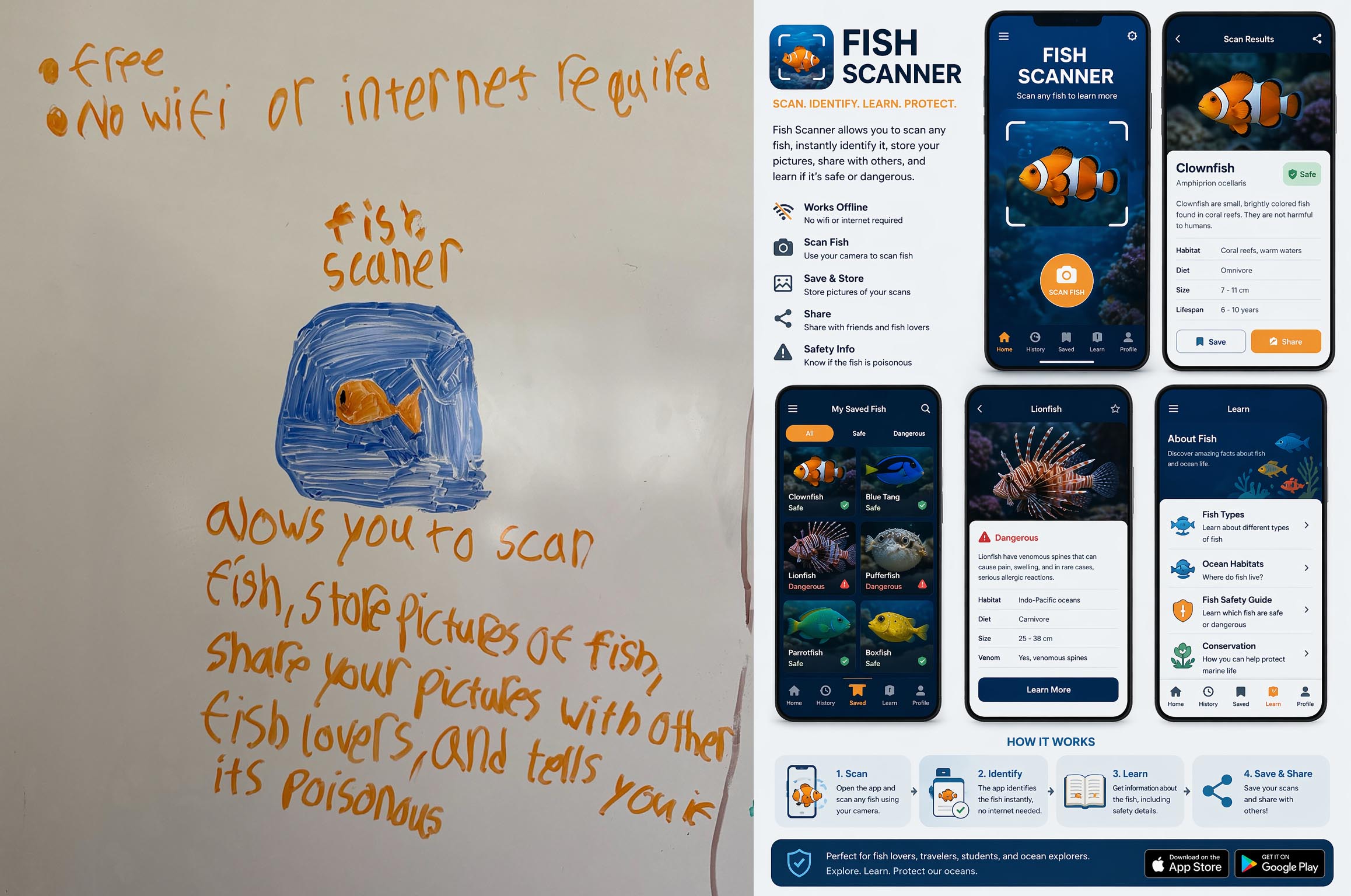
Finally, an ocean-focused scanning app designed to identify fish species and educate users on marine conservation—complete with a vision for mobile deployment on both major app stores.
What stood out wasn’t technical precision. It was intent.
These ideas were not vague wishes. Each child had identified a real problem, defined a real user, and thought through a real experience. And every single one was oriented, at its heart, toward making something better — for their community, for animals, for the planet, for each other.
What They Unknowingly Taught Us About Design
We talk a great deal in this industry about user empathy. We run workshops. We build personas. We interview users and synthesize their needs into experience maps. It is important work, and we do it well.
As designers, we often start with constraints: brand systems, technical feasibility, business goals, and timelines.
The kids started somewhere else entirely. They started with problems they cared about. And that changes everything.
The child who built the healthy food app did not start with a market opportunity. He started with the knowledge that his peers were making choices without understanding, and that information, presented with care, could change behavior. That is content strategy. That is UX writing. That is brand purpose — reduced to its irreducible core.
The world simulator is perhaps the most remarkable of all. A child who wanted to understand how the world works and decided that the best way to understand a system was to build one you could play with. That is the pedagogy behind the most effective educational tools.
AI Turned Imagination Into Prototypes—But Didn’t Replace Expertise
With AI, creating an app or a website is becoming a child's play. Quite literally. We watched it happen.
A sketch became a prototype. A feeling became a screen. An idea that lived in a child's imagination was rendered, in minutes, as something that looked entirely real.
This is an extraordinary shift in what is possible for human imagination. It is also a shift that demands honest reckoning from everyone in this industry.
If anyone can generate a convincing-looking interface, and if any idea can be rapidly prototyped into something visually coherent, then the question is no longer can we build it? The question becomes: is it worth building? Does it feel true? Does it resonate? Does it earn trust?
Those are not questions AI can answer.
AI can generate a visually credible interface in minutes. It cannot understand emotional nuance, brand authenticity, or the subtle points of human friction that make an experience feel right rather than just function correctly. It cannot tell you whether the copy sounds like a real person or a template. It cannot feel the difference between a design that is technically competent and one that inspires trust from the first second. That remains human territory — and it is precisely the work that defines what an agency is truly for.
We have spent twenty years working at the intersection of technology and human experience. We have seen tools repeatedly change the landscape of digital creation. Each wave removed a barrier. Each wave also raised the stakes for the skill no tool could replace: judgment.
AI is the largest single shift in creative production we have ever seen. It is also the clearest argument for what a great agency actually provides.
Taste Is the New Competitive Advantage
The first challenge AI creates is not a creativity problem. It is a filtering problem.
For decades, the constraint in creative work was scarcity: not enough skilled people, not enough time, not enough budget to bring every idea to life. AI removes that constraint dramatically. Ideas can now be generated, visualized, and iterated at a speed and volume that would have seemed implausible five years ago.
But abundance of output is not the same thing as abundance of quality. The challenge is no longer generating enough ideas. The challenge is knowing which ones matter. Without strong filtering — without taste — AI simply scales noise. It produces more, faster, of everything, including the mediocre.
In a world where everyone has access to the same tools, differentiation shifts from execution to judgment. The ability to recognize what will resonate, not just what is possible. Taste has always been a competitive advantage in creative work, but it was once bundled with execution skill in a way that made them difficult to separate. When execution becomes widely accessible, taste separates from execution and becomes the most valuable differentiator.
And taste, unlike a software subscription, cannot be democratized. It is earned. It is built over years of looking at what works and what fails, of understanding audiences deeply, of caring about the difference between a decision that is technically correct and one that is emotionally right. It requires the patience to feel why something is wrong even when you cannot yet articulate it.
That is what twenty years of award-winning work looks like from the inside. Not a collection of beautiful outputs, but a cumulative, hard-won ability to know the difference. To filter. To choose.
That is the thing AI cannot give you. That is the thing a great agency spends its career cultivating.
What Our Kids Reminded Us
We brought our kids to work. And by the end of the day, we were the ones taking notes.
They showed us that creativity is not a department. It’s not a toolset. It’s not even a skill.
It is a way of seeing problems without accepting their limitations too quickly.
AI will continue to accelerate what we can build. But it is still up to us—our teams, our clients, our designers, and yes, even our youngest visitors—to decide what is worth building in the first place.
If you’re building digital experiences, AI-driven products, or meaningful user journeys and want a partner that blends creativity, strategy, and emerging technology, we’d love to hear from you. Get in touch to explore how we can help turn ambitious ideas into impactful digital realities.